
For more than 15 years, I helped shape the rise of digital learning. I built and scaled e-Learning platforms that reached thousands of learners. We positioned e-Learning as the scalable, affordable disruptor, a way to raise professional standards by putting high-quality training on every desk and mobile phone.
And it worked. We broke down barriers, modernised compliance training, and made continuous professional development accessible to everyone. We proudly challenged the inefficiency of the workforce classroom and its bloated delivery.
Then in 2022, something unexpected happened. I was asked to lead the transformation of a traditional training company, the very type of business I’d spent years disrupting, and I had to do it post-pandemic, when classroom training had stopped overnight.
Suddenly, I was on the other side of the training conversation. I had to rethink everything I thought I knew about training, and find new value and ways of delivery that saw us tip the positioning back against online learning.
A Change in Perspective
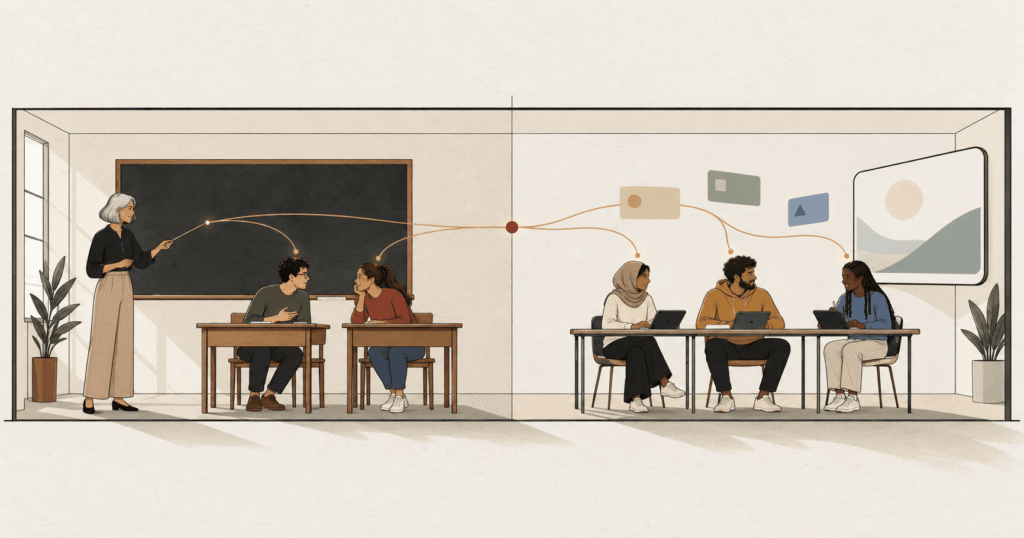
Two years inside that world gave me a new appreciation for what the traditional methods get right. Classroom-based learning, when done well, builds confidence, community, and conversation. It connects people in a way that digital platforms struggle to replicate.
But it also showed me the limits of nostalgia. Traditional training can’t survive on legacy methods alone. It must evolve, faster. The opportunity wasn’t to defend the old way of doing things; it was to modernise it and find ways in which we could re-develop it using those same values of inclusiveness and accessibility that we had led the way on for the previous 15 years.
The goal became clear: to commoditise and digitise what worked best about human interaction, and blend it seamlessly with digital accessibility.
T&C Hasn’t Changed, But the Context Has
The fundamentals are the same as they’ve always been: Training and competence are about measuring and evidencing knowledge, understanding, and application.
What’s changed is how people learn, where they learn, and the speed at which new skills are required. The current and future workforce needs development that is just-in-time, personalised, and embedded into daily work, not bolted on once a year in a classroom or LMS.
Yet, many e-Learning platforms and training providers now look and feel stuck. They’ve become static repositories instead of dynamic growth engines.
The Future of Workforce Development: My Top 5 Tips
-
Blend, don’t replace.
The best solutions mix digital accessibility with human interaction. Think blended learning ecosystems, not single channels. -
Make competence measurable.
Tie learning directly to evidence of application: performance data, case outcomes, or customer feedback. This is where compliance meets growth. -
Design for attention, not completion.
People don’t have time for long modules. Micro-learning, scenario-based content, and conversation-led workshops win every time. We are all well aware of the impact of different learning styles on the learner journey, and we are now blessed with the tools to deliver training in so many different formats. -
Focus on skills, not courses.
Stop counting training hours (I favour the FCA’s review into CPD hours) and start mapping critical skills for the business strategy ahead: resilience, digital literacy, communication, and ethical decision-making. -
Embed learning into work.
The future isn’t about taking people away from their job to learn, it’s about enabling learning within it. Real-time prompts, AI assistants, and mentoring platforms will redefine what “training” means.
Closing Reflection
When I look back, I realise I didn’t abandon my early mission, I evolved it. The next chapter of workforce development isn’t about e-Learning versus traditional methods. It’s about connection, context, and capability.
I once delivered a sales demonstration to a firm for our online learning solution. The owner loved it, and could see the real value in giving his staff the tools to learn. The red flag was when he pulled me to one side and asked if we could block staff access in work hours, forcing them to complete their learning at home in their own time… Hmmm…
The future belongs to organisations that can make learning continuous, personalised, and commercially aligned. Those that don’t will simply fall behind, not because they didn’t train their people, but because they trained them for yesterday.
This is the kind of commercial rebuild I now do for founder-led businesses as a Fractional Commercial Director.
If your business is facing something similar, book a commercial conversation.