
Why is my website attracting the wrong prospects?
You are attracting the wrong prospects because your proposition tells everyone they are welcome. When a page does not say who it is for, the wrong buyers enquire and the right buyers quietly leave without contacting you. A clear fit line, including who you are not for, filters out the wrong enquiries and gives the right buyers confidence to get in touch.
New here? Start with these
The three ideas everything else builds on
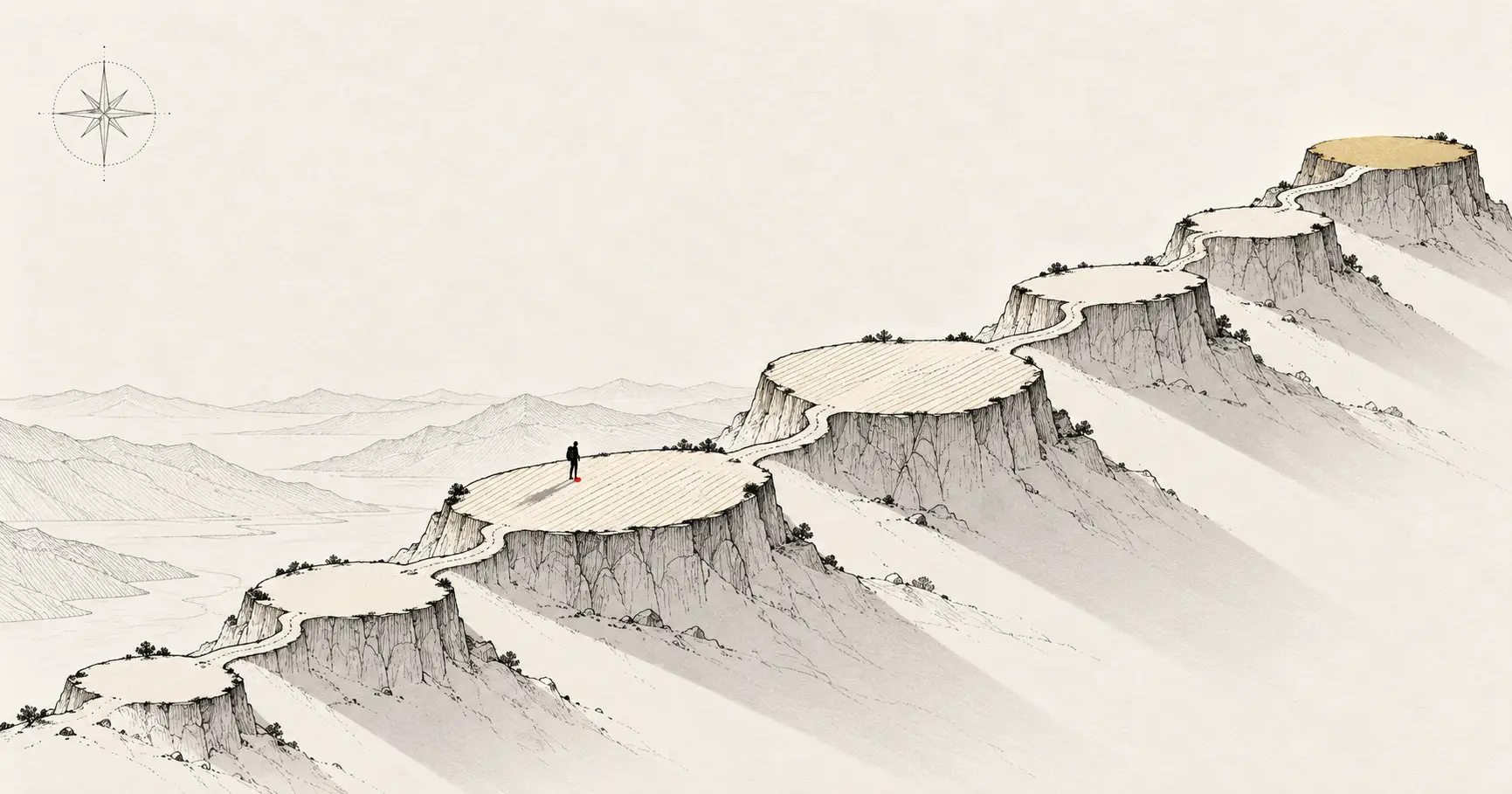 01 · Where you are
The 7 Plateaus: where is your business stuck?
The seven stages every founder-led business moves through, and the ceiling at each one.
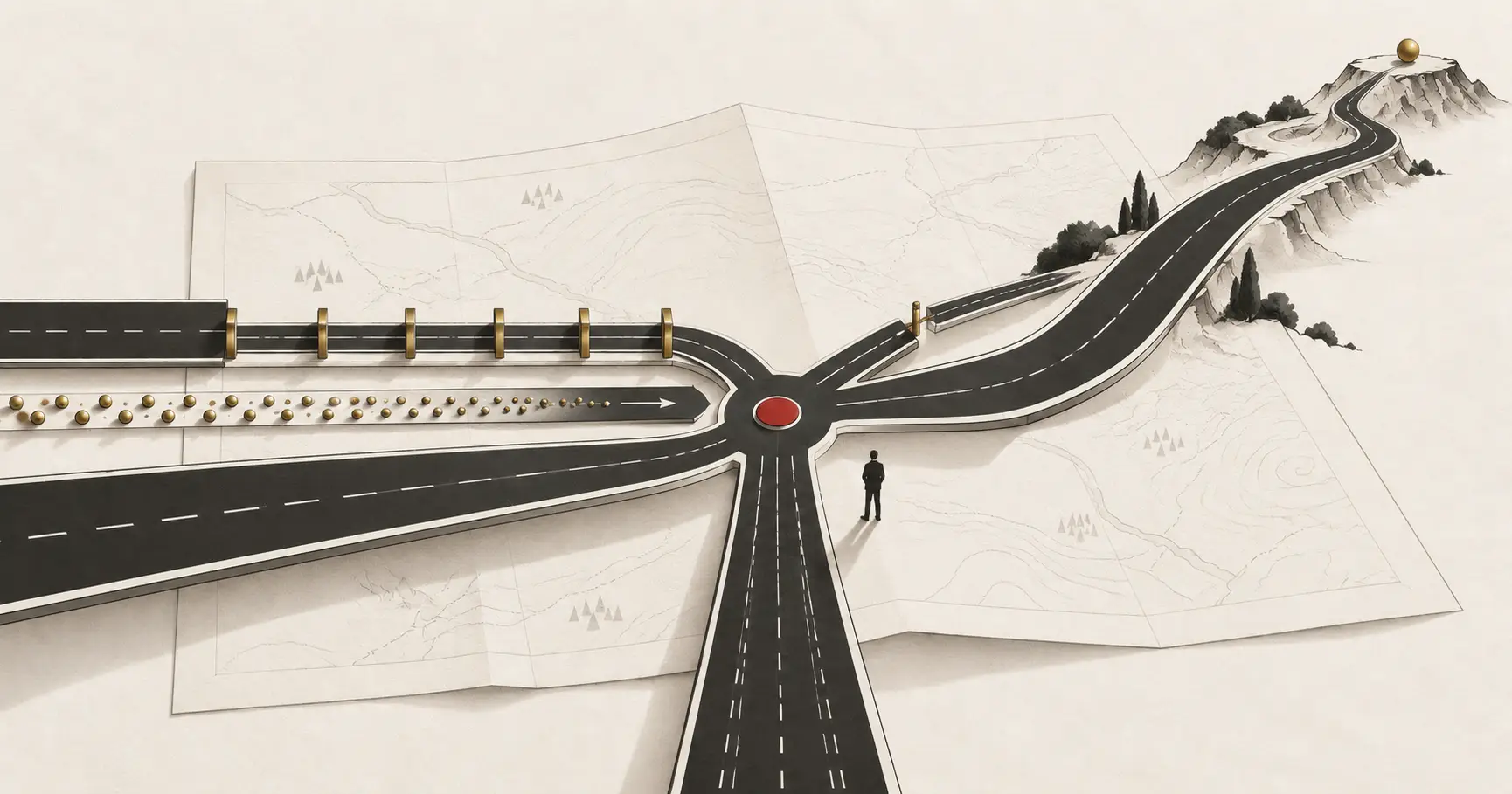 02 · What to build
What is commercial infrastructure?
The systems that let revenue grow without the founder at the centre of every decision.
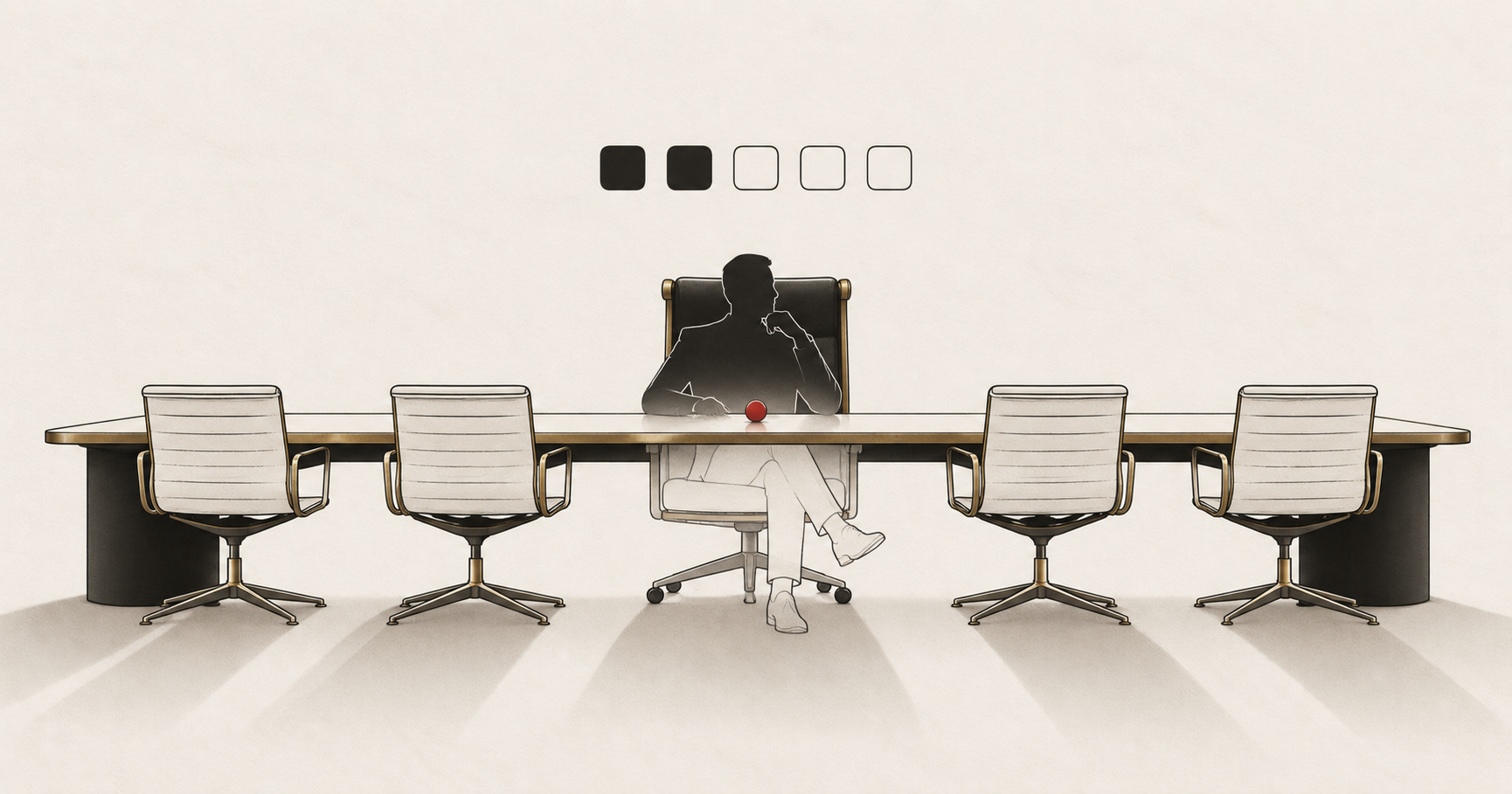 03 · Who builds it
What is a Fractional Commercial Director?
Senior commercial leadership one to two days a week, and when it is the right move.

Commercial decisions: why founders delay them
Founder-led businesses delay commercial decisions because most of them are never consciously made. They happen by default, by absence, or they sit on the founder’s desk. The cost is the commercial outcome waiting behind each decision. Three patterns explain it: the default decision on customer acquisition, the absent decision on staying flat, and the bottlenecked decision that waits for the founder.
Where do you want to get to? 4 types of founder-led business
Founder-led businesses fall into four types, based on what the founder wants from the business: the Maintainer, the Compounder, the Chaser and the Builder. None of the four is wrong. Each needs a different commercial plan and has one predictable trap: drift, founder dependency, a broken sales-to-delivery model, or a business that fails due diligence. Most commercial mistakes happen when a founder runs one type of business with the plan of another.
The logo test: why most competitive advantages are not one
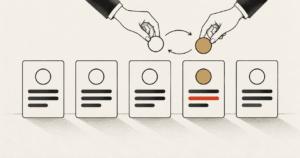
Most competitive advantages are not one because they fail the logo test: put the logo of your closest competitor above your boldest website line and it still reads true. Claims such as our people, our service, being cheaper or working harder do not make a customer pick you over a credible alternative. A real advantage survives that test and is the reason customers chose you, which only customers, not the leadership team, can tell you.
Is it a business model problem or a business plan problem?
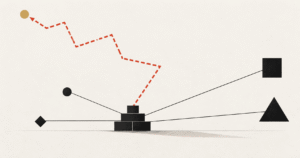
It is a business model problem if what your stakeholders want, or who they are, has changed. It is a business plan problem if you have simply stopped doing the thing that used to work. The business model is how you make money and is structural; the business plan is how you will do it this year and is tactical. Rebuild a model problem; rewrite a plan problem.

Have you built a business, or a very demanding job?
If your business cannot survive a two-week holiday without you, you have built a very demanding job, not a business. In the Addoli 7 Plateaus framework this is the Busy Trap: the business is operationally capable, but the founder is still in every significant decision, sales conversation and escalated client problem. It is not a leadership failure. It happens when a business grows around a person instead of around a system, and it is solvable.

Job Specs: The Role Needs a Blueprint, Not a Better Title
Before writing a job spec, map the real gap the role must close instead of starting with the title. The blueprint has three steps, in this order: identify the key stakeholder group, define the strategic lever (what that stakeholder needs from the business), then set a measurable objective that could sit in front of a £, a # or a %. Write the role around that gap, and only then put a title on it.

The Unglamorous Build: Why AI can’t build a full proposition
AI cannot build a full proposition because it accelerates production, not judgement, and cannot supply knowledge you do not already hold. It produces the visible layer quickly but not the base layer underneath: an evidence base, a delivery model, pricing logic, proof points and a clear account of who it is not for. That unglamorous work builds knowledge, quality and defensibility, and it is what turns AI into a genuine accelerator.

Why hiring a salesperson might not fix your sales problem
Hiring a salesperson often fails because the business is missing commercial infrastructure, not headcount. What looks like a volume problem is usually a margin problem, an infrastructure problem and a founder-dependency problem stacked on top of each other. The founder is also doing five undocumented commercial jobs: qualifying, pricing, framing, selecting and underwriting. Build the infrastructure first, then hire someone to run it.

Nobody Ever Asked Me to Prove It
Founders often lose deals because what they offer buyers is testimony, not evidence. Testimony is telling someone what you know; evidence lets them reach the same conclusion without having been there. The gap shows up in three places: the Trophy Cabinet of logos with no context, an unwritten answer to “why you?”, and the things that only work when the founder is in the room. Because nobody asked for proof, it was never made transferable.