
Why is my website attracting the wrong prospects?
You are attracting the wrong prospects because your proposition tells everyone they are welcome. When a page does not say who it is for, the wrong buyers enquire and the right buyers quietly leave without contacting you. A clear fit line, including who you are not for, filters out the wrong enquiries and gives the right buyers confidence to get in touch.
New here? Start with these
The three ideas everything else builds on
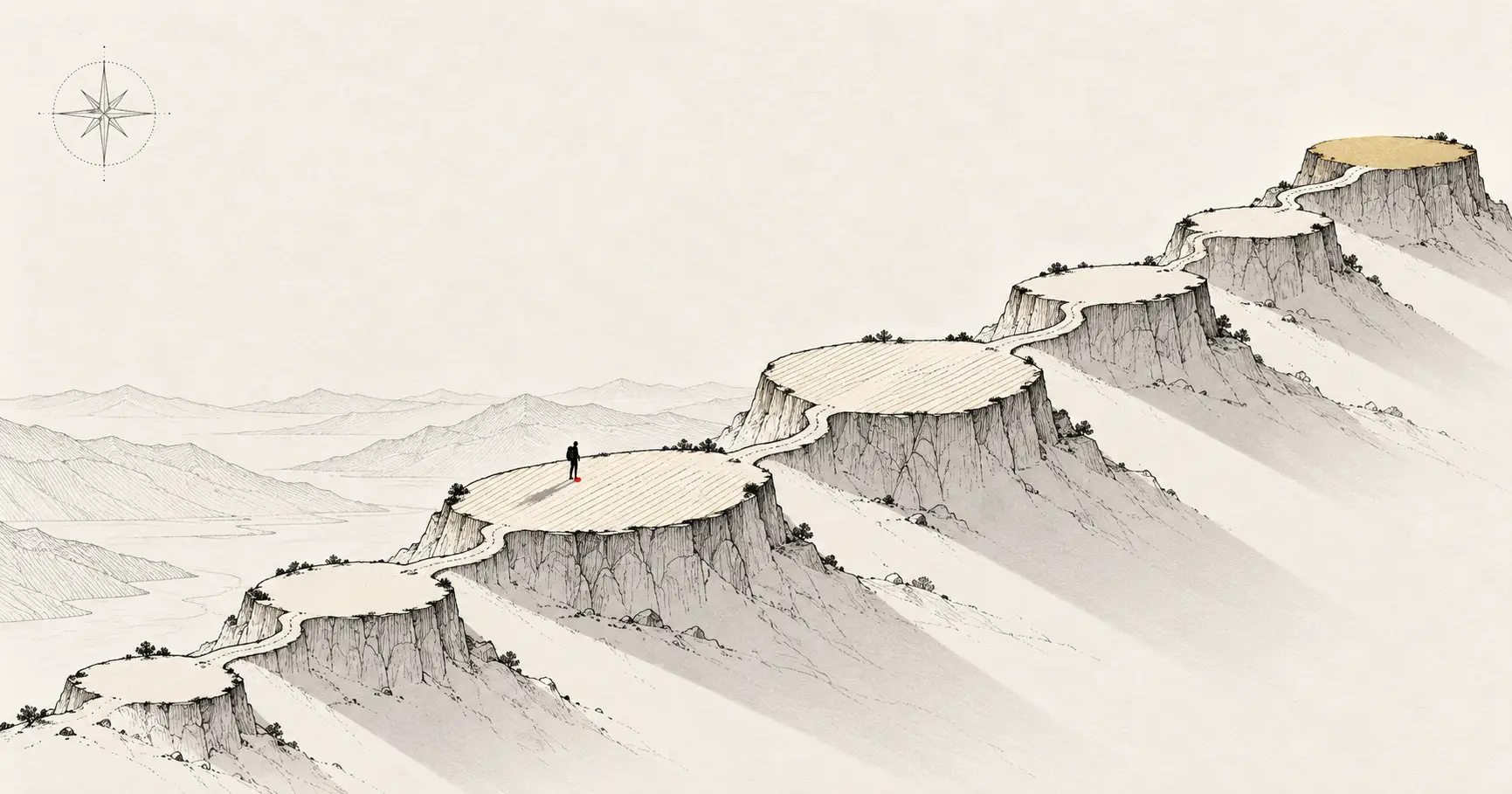 01 · Where you are
The 7 Plateaus: where is your business stuck?
The seven stages every founder-led business moves through, and the ceiling at each one.
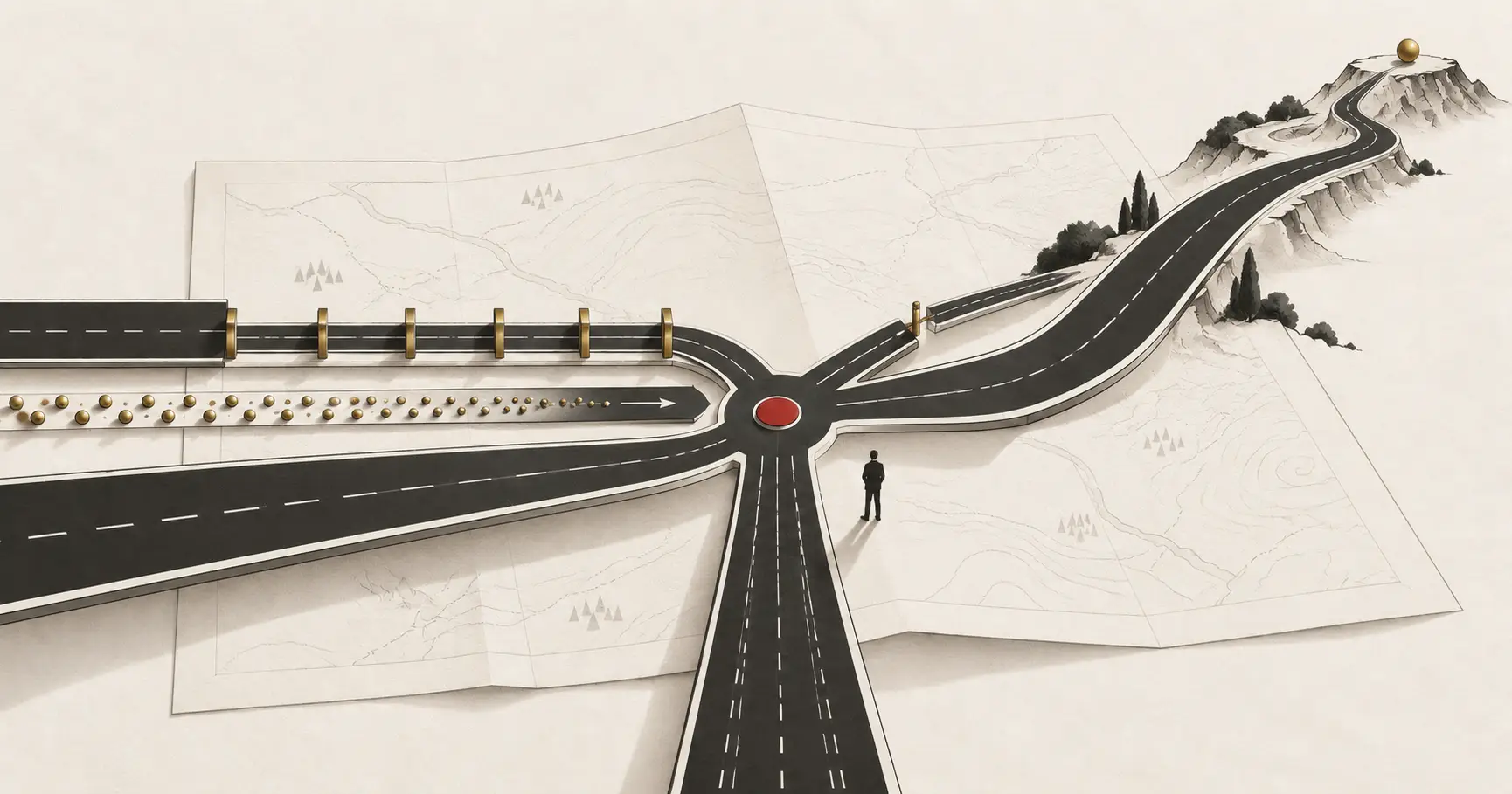 02 · What to build
What is commercial infrastructure?
The systems that let revenue grow without the founder at the centre of every decision.
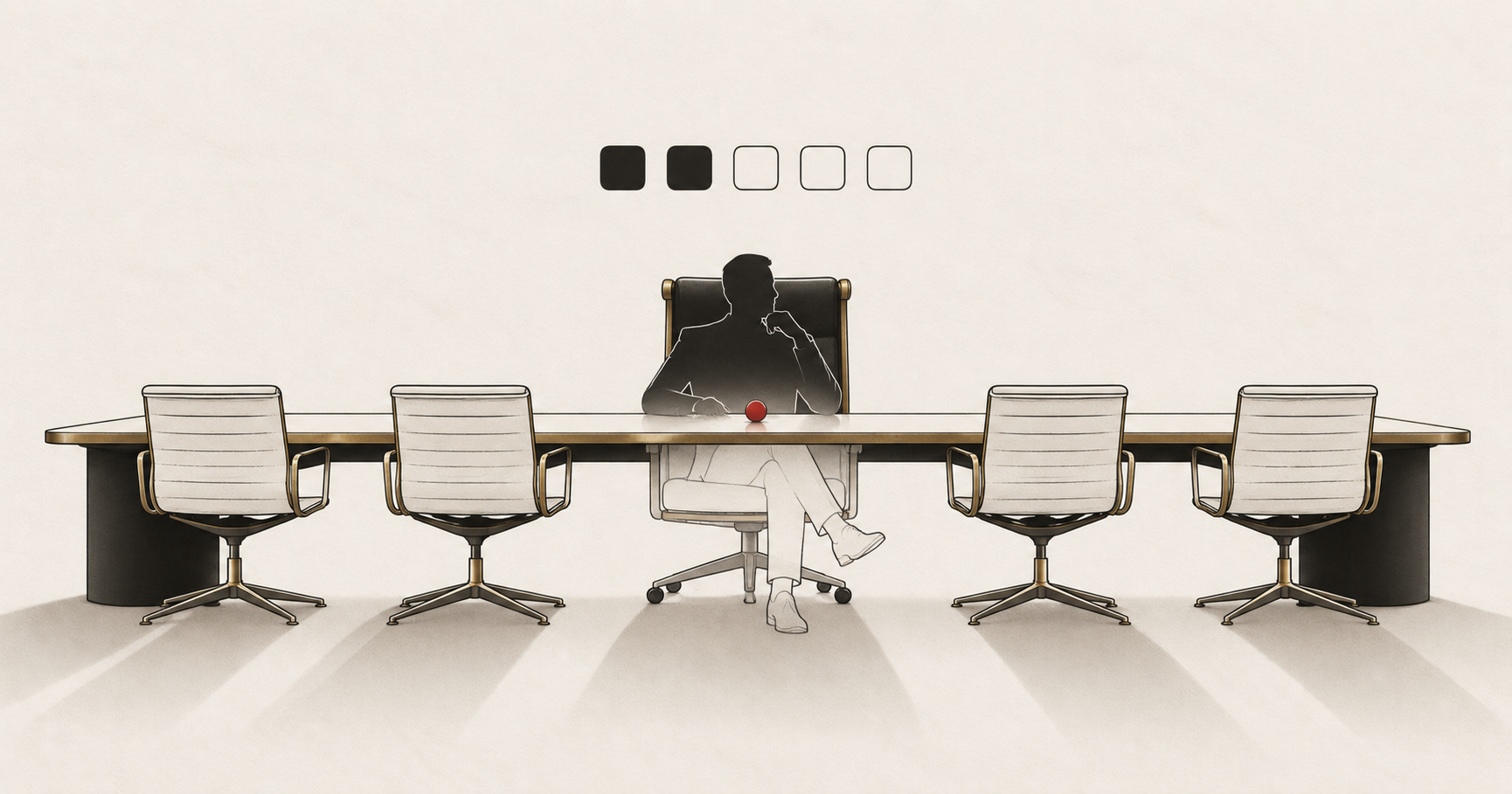 03 · Who builds it
What is a Fractional Commercial Director?
Senior commercial leadership one to two days a week, and when it is the right move.
Fractional Commercial Director vs CMO: What’s the Difference?
A CMO owns marketing (brand, demand generation, content, channels and campaigns), while a Fractional Commercial Director owns the commercial engine (proposition, pricing, sales motion, qualification and growth). The CMO asks how to get attention, and the Commercial Director asks how to turn attention into profitable, repeatable revenue. If not enough people know you, lean CMO. If people know you but do not buy, or do not buy at the right price, lean Commercial Director.
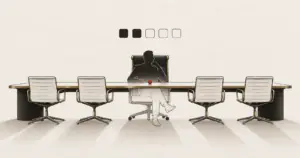
What Is a Fractional Commercial Director? A Simple Guide
A Fractional Commercial Director is a senior commercial leader who takes ownership of your revenue engine, proposition, pricing, sales motion and growth strategy on a part-time, ongoing basis. Fractional refers to time, not seniority: full board-level experience, typically one or two days a week. The role suits founder-led businesses turning over £1m to £15m that need senior commercial leadership but cannot yet justify a full-time hire.
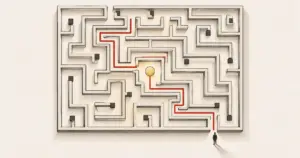
The one question that solves the leadership maze
The one question that solves the leadership maze is: where does this actually end? As with a puzzle book maze, you start at the end goal and work backwards, which shows which paths matter and which are dead ends dressed up as progress. Write down in plain language what the business looks like in about three years, then hold every decision up against it.

A Cart Pushed Too Fast Loses Its Wheel: Lessons From Failure
Failure is information, and the lesson comes from asking why the wheel came off rather than pushing harder in the same direction. Tom Wood’s compliance app showed that the right infrastructure, at the right pace, is the precondition for everything else. His e-learning expansion showed that market readiness matters as much as product quality. The gap between knowing something and acting on it is where most plateaus live.
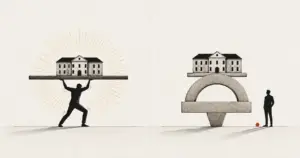
The Founder Effect and the Architecture That Fixes It
The Founder Effect is the personal energy, network and instinct that drive early growth in founder-led businesses. It eventually becomes the ceiling, because a business that only moves when the founder is present is a stressful job, not a scalable enterprise. The fix is one commercial architecture built in sequence: a defined Ideal Client Profile (ICP), a business model built around it, and a market position that makes you the obvious choice.

AI bilge: why your AI output is only as good as your commercial architecture
AI output is only as good as your commercial architecture because AI does not generate commercial intelligence from thin air. It reflects back what it is given. Every business has access to the same models, so the differentiator is what those tools have to work with: documented positioning, a defined ideal client profile, clear processes and decision rights. Without that architecture, AI produces AI bilge: plausible output that could have come from anyone.

Commercial thinking isn’t about who signs the payslip
Commercial thinking is not about whether you own the business; it is about whether you think beyond the transaction. An employee with a sales target can apply it by asking what a client actually needs to succeed, and what a good outcome looks like for them in twelve months, rather than how to close the deal. The target tells you what to deliver, not how to build.

When should you hire a commercial director?
Hire a commercial director when the business is proven but you are still in every significant sale, decision and escalation. In the 7 Plateaus framework that is Plateau 3, The Busy Trap. Hire earlier and there is nothing yet for a commercial director to run. At Plateau 3, a fractional commercial director is usually the right first step, because the job is to build the commercial infrastructure, not to become it.
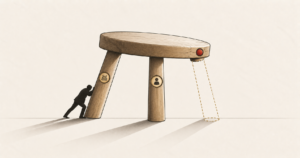
You hired an accountant. Who’s your commercial number two?
Most founders hire an accountant without hesitating, yet run their commercial operation alone, on instinct, for years. The same logic applies to both: the commercial side deserves its own number two, someone with the skills and experience the business needs and the courage to tell the founder the truth. Structure does not slow a business down. Being the only system it runs on does.